 IG Markets
CFD outcomes depend on leverage as much as on the direction you pick.
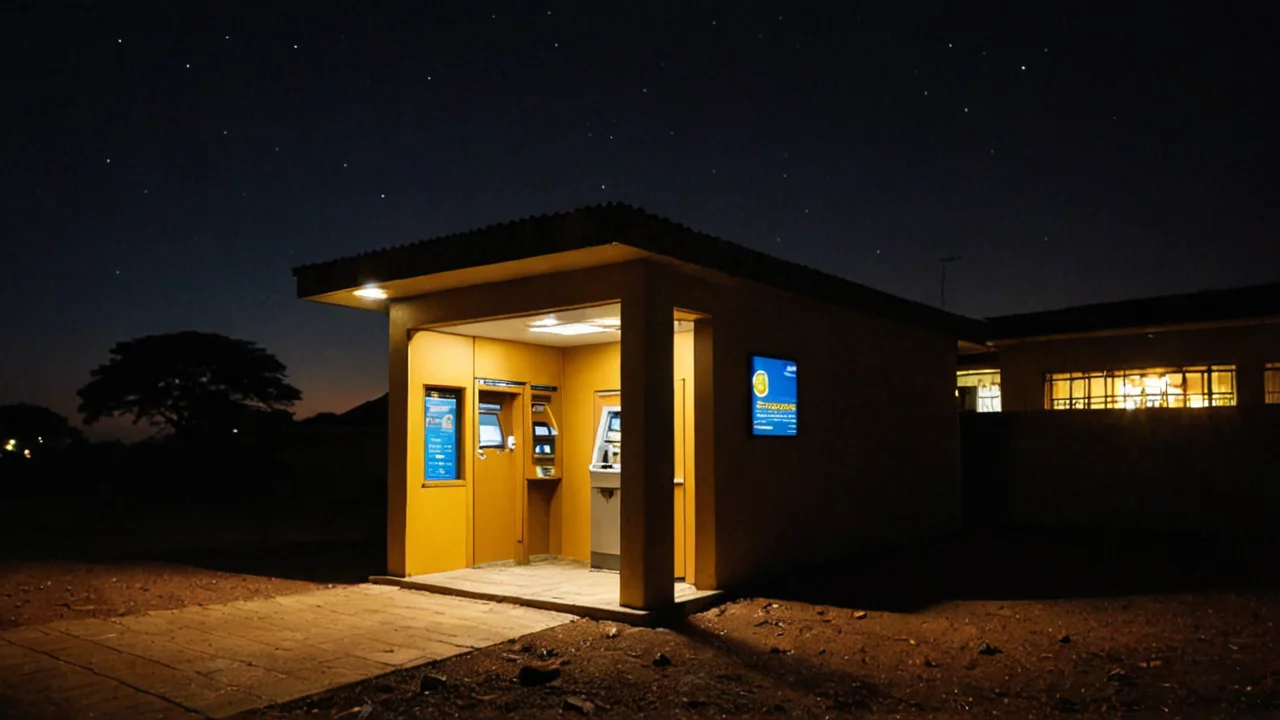
Nairobi Securities Exchange
NSE Financials – Exchange & Capital Markets Infrastructure MidIf you want exposure to the Nairobi Securities Exchange, the listed holding company NSEN is one route. This page explains how a Kenyan trader can approach NSEN through a global provider like IG Markets, and where the real risks sit.
NSEN is the ticker for Nairobi Securities Exchange PLC itself, the company that operates the bourse. It sits in the Financials sector, specifically in exchange and capital markets infrastructure. Its revenue tracks trading volumes, listing activity and related services, so buying NSEN is a bet on the health of the Kenyan capital markets rather than on a single bank or telco. Market cap is mid-sized, dividend payouts are generally low-to-medium, and volatility tends to run medium.
The practical question for a Kenyan retail trader is not whether the NSE has good companies, but how to get exposure in a way that fits your account size, currency and risk tolerance. CFD trading through an international broker is one channel, and it works differently from buying the share directly on the local bourse.
NSEN price drivers
NSEN moves with the activity of the exchange itself. When trading volumes climb, brokerage revenues bump up. When listings slow and turnover drops, the share price tends to drift. That link to transaction flows makes NSEN a cyclical financial stock rather than a steady compounder.
Retail investors have shown stronger interest in the NSE's own listed shares recently, partly as a proxy for wider market sentiment. If the exchange is busy, the exchange's own stock tends to do well. If the market goes quiet, NSEN has no other business line to fall back on.
CFD route vs direct share
A CFD, or contract for difference, lets you speculate on the price of NSEN without owning the underlying share. The broker quotes you a price based on the actual NSE listing, you put up margin, and profit or loss is the difference between entry and exit. No dividend entitlement usually attaches unless the broker adjusts for it.
The alternative is opening an account with a local stockbroker licensed by the CMA and buying NSEN directly on the Nairobi Securities Exchange. That gives you actual shares, dividends and shareholder rights, but it also means settlement currency, custody and local brokerage fees.
Most international CFD providers, IG Markets included, serve Kenyan residents through an offshore entity. IG International Ltd is licensed in Bermuda under a Class F licence, not by the Kenyan Capital Markets Authority. The account base currency for Kenya clients is USD, not KES, which matters for your funding and tax calculation.
Leverage and margin discipline
IG International offers leverage up to roughly 1:200 on retail accounts from Kenya. The CMA caps licensed local brokers at about 1:400 for major FX pairs, but IG is not CMA-licensed, so the relevant cap is whatever the Bermuda entity applies. For a stock like NSEN, a medium-volatility financial, leverage at these levels is aggressive.
At 1:200, a 0.5% adverse move against your position eliminates 100% of your margin. NSEN can easily swing that much in a session when volumes shift. The industry standard for an experienced trader is rarely full leverage; most disciplined accounts run a fraction of the available amount.
Position sizing is the only control that matters here. A sensible approach for a medium-volatility equity is risking no more than 1% of your account on a single trade. That forces you to work out the stop distance first, then the position size, then check whether the margin requirement fits.
Costs and platforms
IG's FX spreads start from 0.6 pips on EUR/USD, which is at the sharp end of the industry standard. Equities on the broader platform carry zero commission on many shares, but you should check the specific spread and any financing cost for NSEN in the CFD account. The minimum deposit is around $0 by bank transfer or roughly $300 by card. No deposit bonuses are offered, which is consistent with a regulated model.
Platforms available include IG's proprietary web and app interface, MetaTrader 4, TradingView, ProRealTime and L2 Dealer. MT5 is not offered, a notable gap if you prefer that workflow. The instrument list runs past 17,000 markets across FX, indices, shares and commodities, so NSEN is part of a much wider shelf.
Funding from Kenya runs through cards, bank transfer and PayPal. M-Pesa is not verified as a deposit method with IG, which is a real friction point for Kenyan traders who are used to mobile money being the default. The local market standard is mobile-first funding with instant settlement in KES; IG sits outside that pattern with USD-denominated accounts and bank/card rails.
Regulation and what it means
IG Group is a London-listed company founded in 1974, a credible long track record. But the entity serving Kenyan residents is IG International Ltd, supervised by the Bermuda Monetary Authority, not by the CMA. That is the crux for a Kenyan trader.
The CMA requires any entity offering online forex to Kenyan residents to hold a valid licence under the Capital Markets (Online Foreign Exchange Trading) Regulations 2017. IG International does not hold one. That means if something goes wrong, your local recourse against the broker is limited, and the CMA's Capital Markets Fraud Investigation Unit would not be the party chasing complaints against IG. The CMA register is at licensees.cma.or.ke and you can always compare what a local licence actually covers.
This is not a statement that IG is fraudulent. It is a statement about which regulator has jurisdiction over your account. A Bermuda-regulated entity has a real regulator, but that regulator's remit is not calibrated for Kenyan consumers.
Tax and remittance reality
Forex and CFD profits are treated as ordinary income for most retail traders in Kenya. That means your trading gains are added to your other taxable income and taxed on graduated bands from roughly 10% up to a top marginal rate of 35%. You file an annual return between 1 January and 30 June declaring worldwide income, including foreign-sourced trading gains.
Trading through a company changes the rate to a corporate 30%. Deductible costs include platform fees, internet and training expenses, so keep records. The Kenya Revenue Authority is the relevant tax body and the current rules are on their site at https://www.kra.go.ke/.
On capital movement, Kenya has been liberal since 1993. There is no hard cap on moving money abroad for individuals, though FX purchases above USD 10,000 require documentation. Sending money to fund an IG account is legally straightforward; the friction is operational, not regulatory.
Risks of trading USD/KES
The first risk is currency. Your account is in USD and NSEN trades in KES on the local bourse. You carry both equity price risk and FX risk between the two, and neither is hedged unless you add a USD/KES position.
The second risk is leverage discipline. With 1:200 available, the platform makes it easy to overreach. NSEN is a company whose earnings depend on market volumes, which are cyclical by nature. A quiet year for the NSE means lower revenue, a falling share price and a tough environment for a leveraged long position.
The third risk is the regulatory gap. If IG International faces a solvency issue, the Bermuda compensation regime is the backstop, not the Kenyan deposit protection or the CMA enforcement machinery. That is a structural fact, not a prediction.
Fits traders who
Already trade CFDs with international providers, hold their base currency in USD, and understand that they are taking equity risk plus FX risk plus offshore regulatory risk in one trade. If you are comfortable with bank transfer funding, use TradingView or MT4, and you size positions by the 1% rule, IG has competitive spreads and a long track record.
Frustrates traders who
Rely on M-Pesa for deposits, want a KES-denominated account, or expect CMA-level oversight of their broker. If instant mobile money funding and local jurisdiction matter more than the raw spread, a CMA-licensed local forex broker will align better with your workflow. That is a fit decision, not a safety judgment.
| Factor | IG Markets (offshore) | CMA-licensed local broker |
|---|---|---|
| Regulator | Bermuda BMA, no CMA licence | CMA Kenya |
| Base currency | USD | KES or USD |
| Leverage | Up to ~1:200 | Capped ~1:400 |
| Min deposit | ~$0 bank, ~$300 card | As low as ~KES 500 |
| Mobile money | M-Pesa not verified | M-Pesa, Airtel Money common |
| Platforms | MT4, TradingView, IG app | Broker-dependent |
Funding limits comparison
| Method | Typical limit | Settlement | Fee pattern |
|---|---|---|---|
| Bank transfer | ~$0 minimum | 2-5 business days | Bank fees apply |
| Card | ~$300 minimum | Instant to 1 day | Card processor fees |
| PayPal | Varies | Instant | PayPal conversion + fee |
| M-Pesa | Not verified | Not available | Not applicable |


Questions
Is the NSEN share price available as a CFD with IG?
+
NSEN is part of the broader market shelf of 17,000+ instruments, which includes shares across major exchanges. The spread and financing costs for a specific NSE listing vary, and the account does not settle in KES, so the CFD reflects the USD-converted price rather than the local quote.
What are the tax implications of trading NSEN CFDs?
+
Profits count as ordinary income for most retail traders, taxed on graduated bands up to a top marginal rate of 35%. You declare worldwide income in your annual KRA return filed between 1 January and 30 June, and trading costs like platform fees and internet are deductible.
Can Kenyan residents open an IG account for NSEN trading?
+
Yes, Kenyan residents can open an account through IG International Ltd, the Bermuda entity serving the rest-of-world segment. There is no CMA licensing on IG's side, so your protection sits with the BMA, not the Kenyan regulator. Check the CMA register at licensees.cma.or.ke to compare licensed alternatives.